Charging the Storm: What a Yellowstone Bison Herd Taught Me on the Eve of 9/11's 25th Anniversary
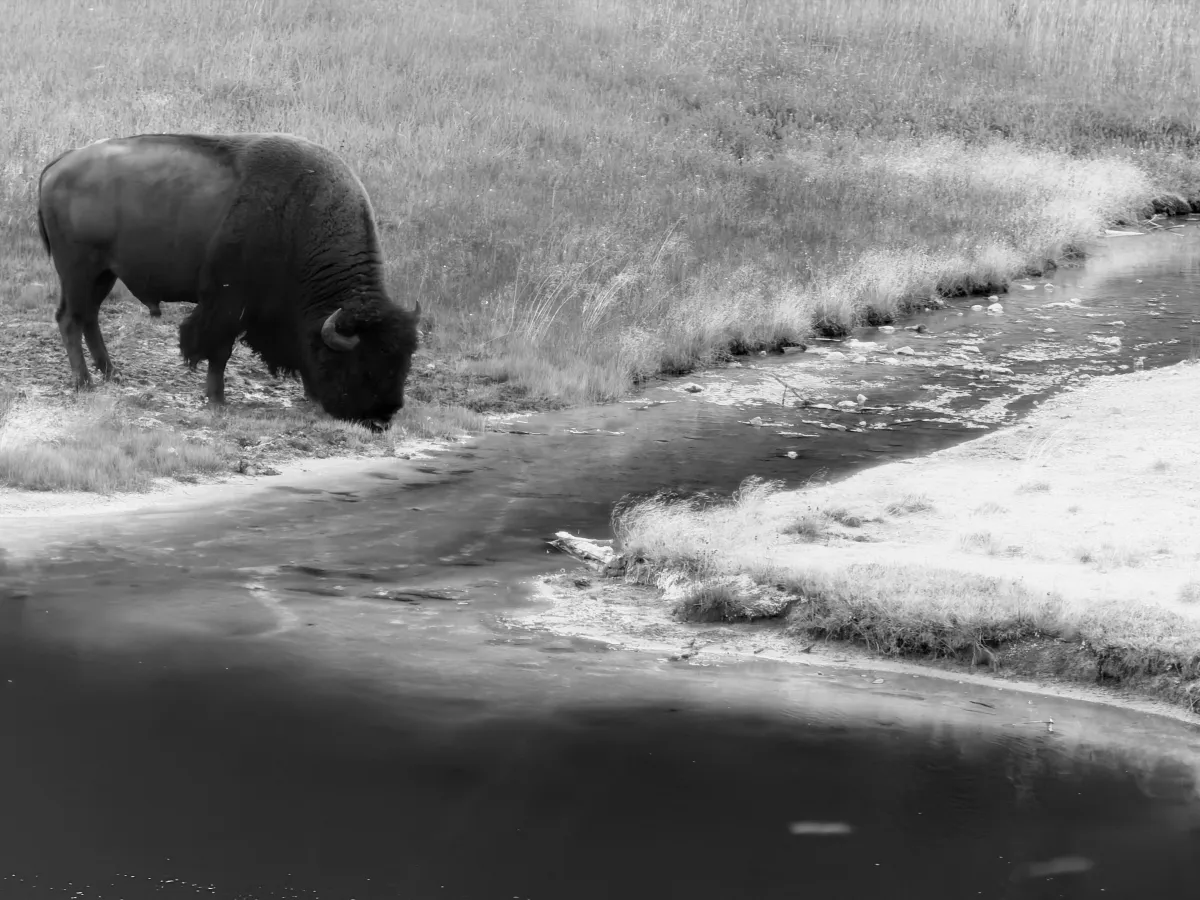
Yesterday we traveled across one of the nation’s grandest drives - the Beartooth Pass and dropped into the Lamar Valley in Yellowstone. In the afternoon, I stood at a pullout along the Lamar River, watching a herd of bison graze across the valley floor. Lamar Valley earns its nickname, the "American Serengeti," honestly—wide-open grass, a river cutting through it, and animals that have been walking this ground for thousands of years, indifferent to the handful of us standing at the roadside with cameras and iPhones.
I hadn't planned to think about September 11th out there. But today is the 25th anniversary, and it turns out a Yellowstone valley is as good a place as any to sit with something that heavy — because it slows you down enough to actually remember where you were - instead of just scrolling past it on social media.
Here's the thing about bison that most people don't know until they've seen it happen, or at least heard a Yellowstone ranger explain it: when a storm rolls in off the mountains, cattle do what seems sensible. They run from it — away from the weather, trying to outlast it. But bison are too slow to outrun a storm, so they've evolved a different strategy entirely. They turn, face the wind, and walk directly into it. By charging toward the storm instead of fleeing from it, they cross through it in a fraction of the time. The cattle that run end up trapped alongside the storm for hours, suffering longer for their avoidance. The bison that charge are through it and grazing again before the sky even clears.
I've heard that story used as a leadership metaphor more times than I can count — "run toward your challenges, not away from them." And it's true, as far as it goes. But standing in that valley yesterday, a day before this particular anniversary, it meant something more to me.
Twenty-five years ago — today, by the time most of you read this — hundreds of firefighters, police officers, and 1st responders did the bison's thing in the most literal way imaginable. Everyone else in those towers, the Pentagon, or on that flight was running out or was the first into the storm of evil. They ran into the building or cockpit. They didn't have the luxury of calculating that charging toward danger shortens your exposure to it, or that it may even mean sacrificing your life. They did what needed to be done because someone had to, and they were the first into the storm. Nearly 3,000 people didn't make it out of the storm that September day. Their names will be read aloud today on the Memorial Plaza, one by one, as they have been every year since—and this year, for the first time, alongside a new exhibit honoring twenty-five years of the service their deaths inspired in others. Seven moments of silence will mark the exact minutes the towers were hit, when they fell, when the Pentagon was struck, when Flight 93 went down in a Pennsylvania field, and one more for everyone we've lost since to the illnesses that came after. That's not a metaphor. That's just what the day requires of us, once a year, so we don't forget the cost of courage and freedom.
I don't think the comparison is that bison are brave and cattle are cowardly. I think it's that bison have simply accepted something cattle haven't: the storm is coming regardless, and the only real choice is how you meet it— the belief that we're meant to grow to give, not to grow for our own comfort, and that growth almost never happens on the side of the valley where it's safe and dry. It happens in the storm, walking toward it on purpose, usually on behalf of somebody who needs you to.
Most of us will never face a moment like the first responders faced twenty-five years ago. I hope none of us ever has to. But all of us are standing somewhere in our own valley right now, watching some kind of weather roll in — in a marriage, a business, a health scare, a decision we've been putting off because facing it head-on sounds harder than just outrunning it a little longer. The bison don't have a choice to make every single time; the choice was made generations ago, and now it's instinct.
Yesterday I got to watch a herd of animals do, without thinking, what it took extraordinary courage for a few thousand people to do on one terrible morning twenty-five years ago. I don't know what to do with that except remember them, be grateful, and try — one storm at a time — to become the kind of person who runs into the building or cockpit. A grateful nation mourns for you and remembers you!
